You’ll use a zeta potential analyzer to measure surface charge and predict colloidal stability, as it assesses electrokinetic mobility under an electric field. In contrast lab alliance, a particle size analyzer quantifies particle size distributions by analyzing light scattering or diffraction patterns, focusing on physical dimensions rather than charge. Size analyzers help optimize formulation and quality control, while zeta potential is essential for stability mapping. Understanding these distinct measurement principles clarifies which tool suits your application needs best.
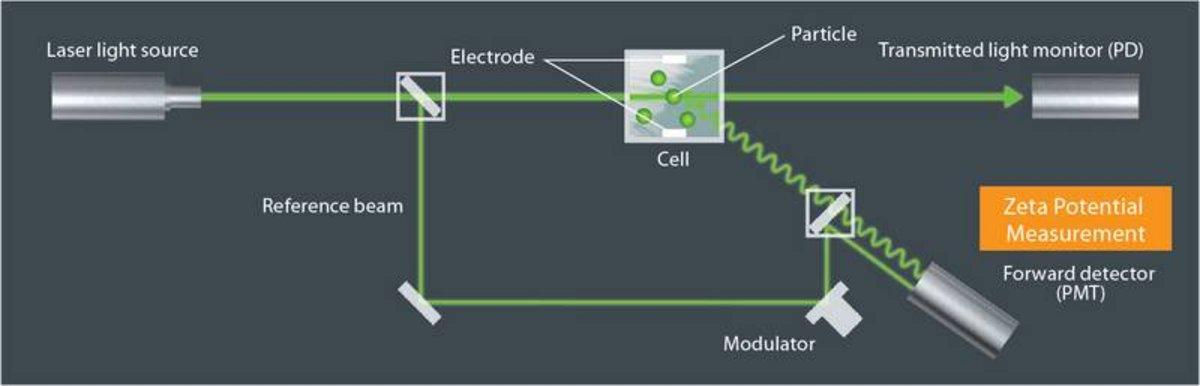
Understanding Zeta Potential and Its Importance
Although you might not encounter zeta potential in everyday conversation, understanding it is essential when working with colloidal systems. Zeta potential quantifies the electrical potential at the slipping plane of particles suspended in a liquid, directly influencing stability and aggregation tendencies. You’ll find that electrokinetic mobility, measured via electrophoretic techniques, serves as a practical proxy for calculating zeta potential. This mobility results from the balance of forces acting on charged particles under an applied electric field. Additionally, ion adsorption dynamics at the particle-liquid interface modify the surface charge https://laballiance.com.my/, thereby altering the zeta potential. By grasping these interactions, you can predict and control colloidal behavior, ensuring dispersion stability or promoting aggregation as needed. Mastery over zeta potential empowers you to optimize formulations and processes where particle interactions dictate performance.
How Particle Size Analyzers Work
You’ll find that particle size analyzers use various measurement techniques like dynamic light scattering or laser diffraction to determine size distributions accurately. Understanding how these methods capture data helps you interpret the results with greater precision. Let’s examine the core principles behind these techniques and how the data gets processed.
Measurement Techniques Explored
When you measure particle size, you rely on techniques that analyze how particles interact with light or fluids. Common methods include dynamic light scattering (DLS), which assesses Brownian motion by correlating scattered light intensity fluctuations, and laser diffraction, measuring angular light scattering patterns to determine size distribution. Imaging modalities like electron or optical microscopy provide direct visualization, enabling precise dimensional analysis. While particle size analyzers focus on these physical interactions, zeta potential analyzers measure electrokinetic phenomena, such as electrophoretic mobility, to assess surface charge and stability. By understanding these measurement techniques, you gain control over selecting the appropriate method based on sample properties and desired data resolution. This approach guarantees you capture accurate, reproducible particle size information essential for optimizing your processes and maintaining product quality.

Data Interpretation Methods
Since particle size analyzers rely on detecting how particles scatter or interact with light, interpreting this data involves converting raw signals into meaningful size distributions. You’ll use statistical modeling to analyze intensity fluctuations or angular scattering patterns, translating them into quantitative size metrics. These models account for factors like polydispersity and shape irregularities, ensuring accuracy. Visualization techniques are vital—they help you assess size distributions graphically, often displaying volume or number-based histograms. This lets you quickly identify dominant particle populations and detect anomalies. By combining robust statistical frameworks with clear visual outputs, you gain the freedom to make informed decisions about your sample’s characteristics. Mastering these interpretation methods empowers you to extract reliable, actionable insights from seemingly complex light-scattering data.
Key Differences in Measurement Principles
Although both analyzers assess particle characteristics, their measurement principles differ fundamentally. When you use a zeta potential analyzer, it measures electrokinetic phenomena—specifically, the velocity of particles under an applied electric field to determine surface charge and stability. You must consider ionic strength effects because variations in the surrounding medium’s ion concentration directly influence particle mobility and zeta potential values. In contrast, a particle size analyzer typically relies on light scattering or laser diffraction techniques, where you analyze the intensity or pattern of scattered light to infer size distribution. This method is purely physical and unaffected by surface charge or ionic environment. Understanding these distinct principles allows you to select the proper tool based on whether you need insight into surface charge interactions or size distribution freedom.
Applications of Zeta Potential Analyzers
You’ll use a zeta potential analyzer primarily to assess colloidal stability by measuring surface charge. This data helps predict particle interactions and aggregation tendencies in your formulations. Ultimately, it provides critical insights for optimizing product performance and stability.
Colloidal Stability Assessment
Evaluating colloidal stability hinges on accurately measuring the zeta potential, which reflects the electrical charge at the particle-liquid interface. By determining this parameter, you can assess whether your colloidal system remains dispersed or tends toward aggregation. Stability thresholds define the zeta potential values below which particles are prone to aggregate, disrupting system uniformity. Monitoring aggregation kinetics further informs you about the rate and mechanism by which particles cluster over time. With this data, you gain insight into formulation robustness and can optimize conditions to prevent sedimentation or flocculation. Employing a zeta potential analyzer allows you to quantify these parameters precisely, enabling predictive control over colloidal behavior—essential for applications requiring consistent suspension stability and performance.
Surface Charge Measurement
When measuring surface charge, zeta potential analyzers provide critical data that helps you understand particle interactions in your system. Surface charge influences the electrical double layer interactions, which govern particle stability and behavior. By quantifying zeta potential, you gain insight into these electrostatic forces essential for controlling aggregation or dispersion.
Here’s what you can achieve with precise surface charge measurement:
- Characterize the electrical double layer around particles.
- Predict repulsive or attractive forces affecting particle suspension.
- Monitor changes in surface charge due to pH or ionic strength variations.
- Optimize conditions to maintain desired particle interaction profiles.
This data empowers you to design and control systems with freedom, ensuring reliable performance based on fundamental electrokinetic properties.
Formulation Optimization Insights
Understanding surface charge through zeta potential measurement lays the foundation for optimizing formulations. By conducting stability mapping, you can systematically assess how variations in pH, ionic strength, or concentration influence colloidal stability. This targeted approach enables you to identify best conditions that minimize aggregation risks. Additionally, excipient screening using zeta potential analyzers allows you to evaluate the impact of different additives on particle surface charge, guiding the selection of components that enhance dispersion stability. This precise control over formulation parameters guarantees reproducibility and performance consistency. Ultimately, leveraging zeta potential data empowers you to design robust, stable formulations tailored to your specific application needs, without sacrificing flexibility or freedom in your development process.
Applications of Particle Size Analyzers
Particle size analyzers measure the dimensions of particles to provide critical data for optimizing formulation, quality control, and process development. When you use these analyzers, you gain precise control over processes like industrial milling and environmental monitoring. Here’s where they’re most valuable:
- Industrial milling – ensuring consistent particle size for ideal product performance.
- Pharmaceutical manufacturing – controlling drug dissolution rates through tight particle size distribution.
- Environmental monitoring – evaluating particulate pollution and its impact on air quality.
- Food processing – maintaining texture and stability by monitoring ingredient particle sizes.
Choosing the Right Analyzer for Your Needs
Selecting the appropriate analyzer depends on the specific parameters you need to measure and the nature of your samples. If particle size distribution is your primary concern, a particle size analyzer offers precise measurements tailored to that need. Conversely, if surface charge and stability are critical, a zeta potential analyzer is indispensable. Consider budget constraints carefully; zeta potential analyzers often involve higher initial costs and may require more specialized user training. Evaluate your team’s technical expertise—adequate training guarantees reliable data and efficient operation. Additionally, think about sample types and throughput demands to choose an instrument that aligns with your workflow. By balancing measurement needs, financial limits, and training feasibility, you can select the analyzer that grants you freedom to optimize your research or production processes effectively.
Conclusion
When choosing between a zeta potential analyzer and a particle size analyzer, you need to focus on your specific measurement goals. Zeta potential analyzers assess surface charge and stability in colloidal systems, while particle size analyzers determine size distribution and morphology. Understanding these distinct principles guarantees you pick the right tool for accurate characterization. By aligning your application requirements with each analyzer’s capabilities, you’ll achieve precise, reliable data essential for effective formulation and quality control.
